Li-ion Batteries
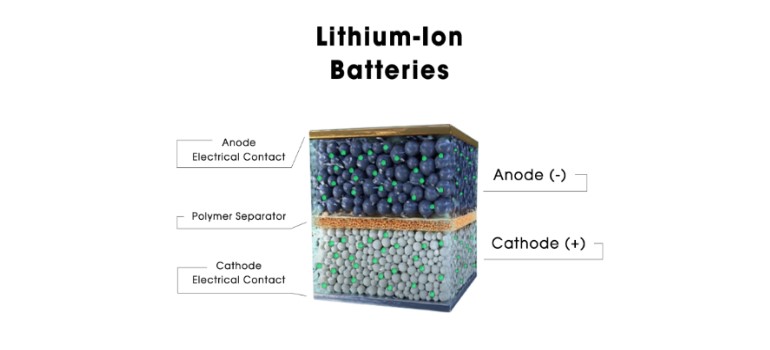
What Are Lithium-Ion (Li-Ion) Batteries?
Lithium-ion (Li-Ion) batteries are among the most popular types of rechargeable batteries today, known for their high energy density, long lifespan, low self-discharge rate, and lightweight design. These batteries typically use lithium oxide as the positive electrode and carbon (usually graphite) as the negative electrode.
How Do They Work?
The working principle of Li-Ion batteries is based on the movement of lithium ions between two electrodes (anode and cathode):
- 1- During Charging:
- 2- During Discharging:
Lithium ions move from the cathode (positive electrode) to the anode (negative electrode) through the electrolyte.
Electrons flow through the external circuit towards the anode. Energy is stored during this process.
The lithium ions stored in the anode move back through the electrolyte to the cathode.
Electrons flow back through the external circuit, releasing energy during this process.
Where Are They Used?
Li-Ion batteries are used in a wide range of applications:
• Electronic Devices: Widely used in portable devices such as smartphones, laptops, tablets, and digital cameras.
• Electric Vehicles: The primary power source in electric cars, scooters, and bicycles.
• Renewable Energy Systems: Used in energy storage systems for renewable energy sources like solar panels and wind turbines.
• Medical Devices: Found in portable medical devices such as pacemakers and implants.
• Aerospace and Defense: Preferred in drones, military equipment, and spacecraft.
Li-Ion batteries are critical in many industries due to their compact size and high performance. However, they must be used and charged correctly to avoid safety risks.